Tuesday, March 4, 2014

Fog Bank, March 3, 2014

A dust storm from Cimarron County, Oklahoma. Earth Science Picture of the Day, of course.
http://epod.usra.edu/blog/2014/02/cimarron-county-dust-storm.html

Nick Walker, from The Weather Channel, passed on a wonderful Undulatus Asperatus cloud photo
https://twitter.com/wxdude/status/438353274710663168/photo/1

For much of British Columbia, Canada, January was warmer than normal, causing some spectacular fogs.
Earth Science Picture of the Day has a nice photo taken January 24, 2104
http://epod.usra.edu/blog/2014/02/fog-engulfs-vancouver.html

Spaceweathergallery has a great photo of the Aurora, taken in Reykjavik. It has very little green in it, and the photographer thought at first he was seeing the effects of a volcano eruption
http://spaceweathergallery.com/indiv_upload.php?upload_id=94890

Halos and ice crystal arcs from Utah, featured at Earth Science Picture of the Day
http://epod.usra.edu/blog/2014/03/halo-display-at-snowbird-utah.html

It is March 3 as I record this. We had snow all over North Carolina. Other people have said this, but…
Go home, Winter. You're drunk.

Finally, a bit of audio about why the Fog Bank is part of Weather Brains. The Origins of the Fog Bank


For JB
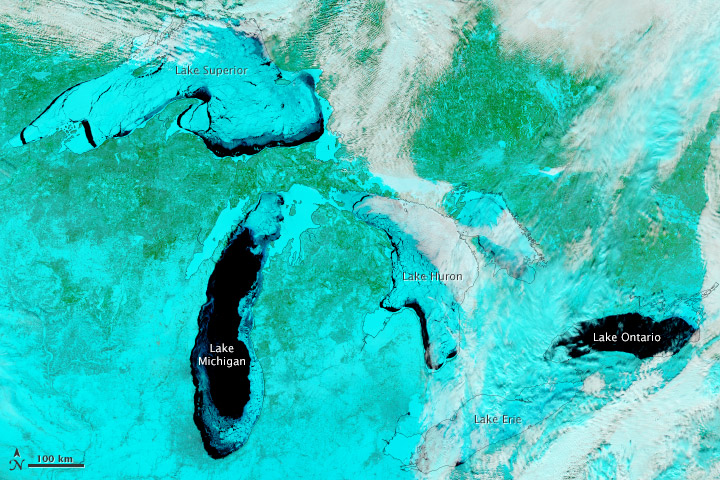
An image from NASA MODIS satellites showing the Great Ice Rinks, or as they're more commonly known, the Great Lakes
http://eoimages.gsfc.nasa.gov/images/imagerecords/83000/83169/GreatLakes_amo_2014050_721.jpg


Audio Fog Bank

Tuesday, February 25, 2014

Fog Bank, February 24, 2014

Not bad, posting the morning after the show:

This is David Phillips with the Fog Bank. You can find my links at skydaver.blogspot.com

First up,
Astronomy Picture of the Day has a rainbow pileus cloud photo
http://apod.nasa.gov/apod/ap140219.html

ESPOD with green rim & flash
http://epod.usra.edu/blog/2014/02/green-rim-and-flash-over-the-notre-dame-de-la-garde-in-marseille-france.html

Andrew Freiden of NBC12 in Richmond, VA, has a YouTube video, "Franilla Ice: Ice Ice Freiden"
https://www.youtube.com/watch?v=CoCaBJ7HXe0

I'm not sure who brought this to my attention, but the SPC has a short daily web briefing
http://www.spc.noaa.gov/products/outlook/pwo.mp4?utm_content=bufferf997d&utm_medium=social&utm_source=twitter.com&utm_campaign=buffer

It's not super easy to find. Go to the outlook page, http://www.spc.noaa.gov/products/outlook/, click on the Current 1 day outlook, then click on the Public Severe Weather Outlook. Near the top of that page is a link for 'Experimental Multimedia Briefing MP4.' That link seems to change daily, but you can bookmark the Public Severe Weather Outlook, and that is in my blog.
http://www.spc.noaa.gov/products/outlook/pwo.html
SPC has a new experimental Twitter service, twitter.com/NWSSPC

Thanks for listening, Skydaver Out.

The link sent for JB
How about some beautiful Aurora phones, from Grand Forks, North Dakota
http://spaceweathergallery.com/indiv_upload.php?upload_id=94434


Audio Fog Bank

Monday, February 17, 2014

Fog Bank, Feb 17, 2014

A rare posting of the Fog Bank in advance of the WeatherBrains show!

ESPOD, Wave clouds over Southern Appalachians
http://epod.usra.edu/blog/2014/02/wave-clouds-over-the-southern-appalachians.html

The Capital Weather Gang has another home run blog post, on The Love Storm, or Snochi, or even the other name I won't use just cause.
http://www.washingtonpost.com/blogs/capital-weather-gang/wp/2014/02/14/the-feb-12-13-2014-snow-making-machine-under-the-hood/

NOAA Weather Partners has been busy. Two picks, "Get Weather Ready: Before a Tornado"
http://www.youtube.com/watch?v=iyfn1wgAOaE

and "Get Weather Ready: After a Tornado"
http://www.youtube.com/watch?v=WnpcSle4SbE

ESPOD with storm clouds over Essex, UK, where they've been having some terrible weather.
http://epod.usra.edu/blog/2014/02/storm-cloud-over-essex-uk.html

Thanks for listening, Skydaver out.

Link for JB.
East CONUS water vapor loop
http://www.goes.noaa.gov/GSSLOOPS/ecwv.html

Audio Fog Bank, Feb 17, 2014

Wednesday, February 12, 2014

Fog Bank, Feb. 10, 2014

Finally caught up!

My first pick is a letter sent from CoCoRaHS about a drought project in the Carolinas. You might be able to find information at the CoCoRaHS home page, but I'll post the letter in the bottom of this post.

The Capital Weather Gang had an article titled "The drawbacks of the automated weather app and the need for human touch"
Their example of a bad app? The Weather Channel.
http://www.washingtonpost.com/blogs/capital-weather-gang/wp/2014/02/04/the-drawbacks-of-the-automated-weather-app-and-need-for-the-human-forecaster/

This isn't weather, but most weather geeks have at least a slight interest in space, so I bring the Lunar Picture of the Day, with an animation, with audio from the Apollo 8 mission, of the photography of the first Earthrise
http://lpod.wikispaces.com/February+4%2C+2014

There is going to be an app for seeing the Northern Lights, live (I think), from the Poker Flat Research Center in Alaska.
http://www.space.com/24604-northern-lights-auroras-app.html?cmpid=514648_20140207_18241254
There is also a demo web page. The app should come out in March. I hope it's both iPhone and Android!

NOAA weather Partners has uploaded a new video; Get Weather Ready, during a tornado
http://www.youtube.com/watch?v=ByveULSahKY&feature=em-uploademail


Audio Fog Bank, Feb. 10, 2014

The CoCoRaHS letter:

Dear North Carolina CoCoRaHS observers,

We would like to take a moment to share some exciting news with you regarding the ability to report drought impacts through the CoCoRaHS program.

Have you ever considered how the precipitation that you monitor every day affects the plants, animals and people in your community? Would you like to participate in a project that takes a closer look at these effects and makes them part of your role as a CoCoRaHS volunteer?


The Carolinas Integrated Sciences & Assessments (CISA) team at the University of South Carolina, in partnership with CoCoRaHS and the National Integrated Drought Information System (NIDIS), is working to establish a network of CoCoRaHS condition monitoring volunteers in the Carolinas. These volunteers are using CoCoRaHS to track things such as plant and soil conditions, weather impacts to local businesses, water quality and quantity, and wildlife by entering a weekly environmental status report online.

The ultimate goal of this project is to begin developing baseline data of environmental conditions when precipitation levels are ‘normal’ so that changes and impacts caused by a lack of rain during periods of drought are more easily identified.  This information can also help determine when conditions begin to improve once precipitation resumes.

If you would like to learn more about this project and how you can become involved, please join us for an online webinar on Friday, February 21st at 11:00 a.m. Webinars are an easy way to join a meeting or group conversation without ever leaving your home. It is a quick way to connect with your CoCoRaHS colleagues to discuss this new opportunity. You don’t have to commit to the project to join the discussion - information about signing up will be provided during the webinar.

If you would like to participate in the webinar please e-mail your name and CoCoRaHS station number to Amanda Brennan at abrennan@sc.edu. Amanda can also answer any additional questions you might have about the project.

Take care and stay warm!

Regards,
David Glenn and Heather Dinon Aldridge
NC State CoCoRaHS Coordinators

Fog Bank, Jan. 27, 2014

The first and second picks come from
Earth Science Picture of the Day, with a photo & explanation of a Sierra Wave
http://epod.usra.edu/blog/2014/01/sierra-wave-clouds.html

and then with discussion of unusual clouds in the Netherlands
http://epod.usra.edu/blog/2014/01/unusual-sky-over-deventer-netherlands.html

@AlexJLamers Tweeted a link to a youtube video on the science & beauty of Auroras
I don't know if James will watch this; it's from PBS
http://www.youtube.com/watch?v=ZVTbolyobcE

My fourth pick
An article on CNN Money about the Weather Channel/Direct TV playground brawl
http://money.cnn.com/2014/01/25/news/companies/weather-channel-directv/index.html

I'll close with a short mention of the WeatherCaster smartphone app. Since I first saw it, it's been improved, and is more stable.
It's available for Android & iPhone, and might be worth a try.


Audio Fog Bank, Jan. 27, 2014

Fog Bank, Jan. 20, 2014


First up, @Starwalk posted a beautiful Aurora picture
https://twitter.com/StarWalk/status/412062055072796672/photo/1

My second pick is an article from the American Society of Civil Engineers about research examining the Joplin tornado
http://www.asce.org/CEMagazine/Article.aspx?id=23622328957#.UrCnImRDtPx

Third, Astronomy Picture of the Day with ice pillars in Finland
http://apod.nasa.gov/apod/ap131218.html

My fourth pick might not be accessible for a little while, as ESPOD upgrades their servers, but they had a great photo of
 Iridescent clouds
http://epod.usra.edu/blog/2013/12/iridescent-clouds-observed-above-bangalore-india.html


I'll close with information from Ron Malinowski, who shared  links to 2014 Central Indiana Severe Weather Symposium,
http://www.crh.noaa.gov/ind/?n=2010centralindianasevereweathersymposium
and the Ohio State Severe Weather Symposium
http://www.geography.ohio-state.edu/metclub/symposium.html

Thanks for listening, Skydaver out.

Sent to JB.
NOAA Weather Partners posted a video of a weather balloon launch with a GoPro camera aboard. http://www.youtube.com/watch?v=6kSju2rIFPs


Audio Fog Bank, Jan. 20, 2014

Fog Bank, Jan. 6, 2014

Hello everyone, this is Dave Phillips. You can find my picks of the week at skydaver.blogspot.com. I just have two pics this week, because I'm going to spend a bit of time on number one, an update on the LaCrosse weather station.

The rain gauge is decently accurate. I've been comparing it with the CoCoRaHS gauge, mounted right next to it, and it's good enough.  I think, but don't have an easy way to check, that the temp & humidity gauges are also good enough.

Overall, I give the unit a C+.  The plus part of the grade is because of the price, $80. My dissatisfaction comes from the anemometer.  The system uses the thermometer sensor unit as its central data collection, and that sends the data for all the sensors to the base station and a wireless gateway. Everything has to be no more than 200 feet from the thermometer.  I have my rain gauge next to my CoCoRaHS gauge, 110 feet away from the thermometer on my front porch. My porch faces north, and the thermometer never gets hit by the sun.
I tried to put the anemometer at the same spot in the yard (it's my best spot for rain & wind sensing), but although the rain gauge has no problem getting its signal through the walls of my house, the anemometer cannot.  I might try moving my thermometer up in the eaves of my back porch, but I think the morning sun might disrupt those readings.  Given the small size of my lot, the wind gauge isn't going to be super accurate anywhere, so I'm guessing I'll end up with that somewhere in the front of the lot.

Finally, there isn't any interface to feed your weather data to any of the crowd sourced weather data sites. It just lets you see your own data on a their website.

An interesting story about the BBC's Shipping Forecast, from NPR
http://www.npr.org/2013/12/16/249722733/the-shipping-forecast-from-britains-seas-into-its-soul


Fog Bank, Jan. 6, 2014